

Our Products
PLC is the most trusted and largest name in the lead Industry. Today, after 30 years of exclusive focus on the lead industry, we have refined our expertise in manufacturing this versatile and vibrant alloy with a strong foundation.
Our lead product includes Pure Lead(refined) and Lead Alloys Ingots, which are produced by Recycling of Lead Battery Scrap (ISRI- RAINS) & Smelting of Lead Ore / Concentrate. We collect local lead battery scrap from various locations.
Lead is a prime-group element with the symbol Pb and atomic number 82. Lead is a soft, malleable poor metal. It is also known as one of the heavy metals. It is used in lead-acid batteries, building construction, shots and bullets, weights, soldering, fusible alloys, pewters, and as a radiation shield. Lead has the highest atomic number of all of the stable elements.
While recycling lead batteries, we recover materials like plastic and sulfuric acid as well. This practice highlights efficient resource use and reflects a commitment to taking care of the environment.
Lead
The lead grids, lead oxide, and other lead parts are cleaned and melted together in smelting furnaces.
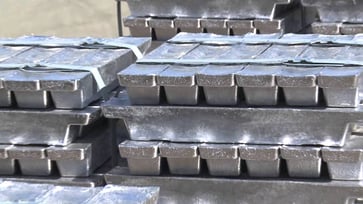
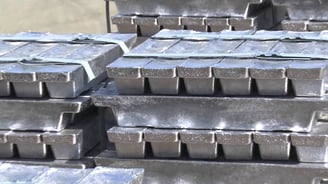
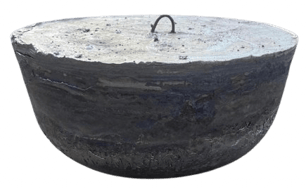
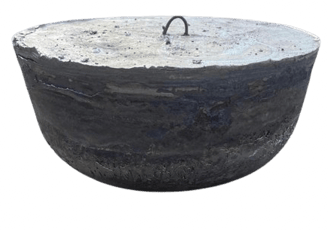
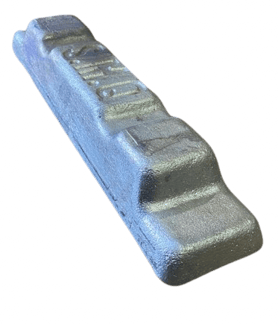
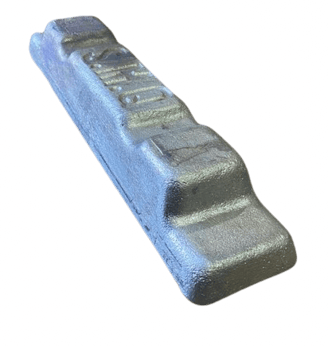
The molten lead is poured into ingot molds. Large ingots, weighing about one ton. Smaller ingots, weighing 30 kg. After a few minutes, the impurities, otherwise known as dross, float to the top of the still-molten lead in the ingot molds. The dross is scraped away, and the ingots are left to cool.
When the ingots are cool, they are removed from the molds and sent to battery manufacturers, where they are re-melted and used in the production of new lead plates and other parts for new batteries.
Plastic
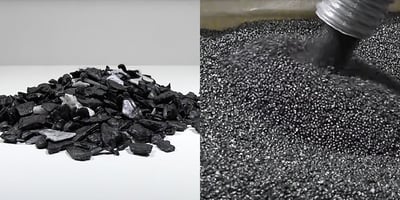
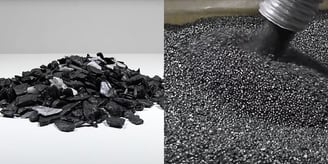
The polypropylene pieces are washed, blown dry and sent to a plastic recycler where the pieces are melted together into an almost-liquid state. The molten plastic is put through an extruder that produces small plastic pellets of a uniform size. Those pellets are sold to the manufacturer of battery cases and the process begins again.
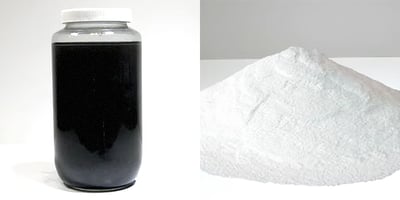
Sulfuric Acid
The acid is neutralized with an industrial compound similar to household baking soda. This turns the acid into water. The water is treated, cleaned, and tested to be sure it meets clean water standards. Then it is released into the public sewer system.
Another way to treat acid is to process it and convert it to sodium sulfate, an odorless white powder used in laundry detergent, glass, and textile manufacturing. This takes a material that would be discarded and turns it into a useful product. Acid can also be reclaimed and reused in new battery products through innovative recycling processes.
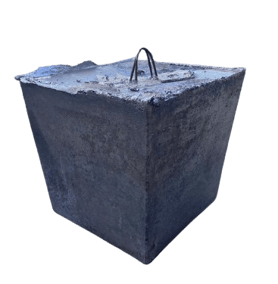
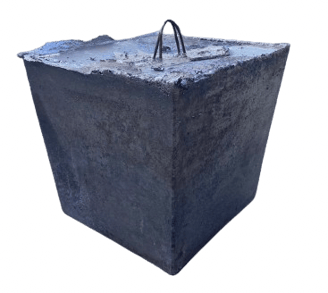
Black Lead
The lead grids, lead oxide, and other lead parts are cleaned and melted together in smelting furnaces.
The molten lead is poured into ingot molds. Large ingots, weighing about one ton. Smaller ingots, weighing 30 kg. After a few minutes, the impurities, otherwise known as dross, float to the top of the still-molten lead in the ingot molds. The dross is scraped away, and the ingots are left to cool.
When the ingots are cool, they are removed from the molds and sent to battery manufacturers, where they are re-melted and used in the production of new lead plates and other parts for new batteries.
Soft Lead
The lead grids, lead oxide, and other lead parts are cleaned and melted together in smelting furnaces.
The molten lead is poured into ingot molds. Large ingots, weighing about one ton. Smaller ingots, weighing 30 kg. After a few minutes, the impurities, otherwise known as dross, float to the top of the still-molten lead in the ingot molds. The dross is scraped away, and the ingots are left to cool.
When the ingots are cool, they are removed from the molds and sent to battery manufacturers, where they are re-melted and used in the production of new lead plates and other parts for new batteries.
Lead Ingots
The lead grids, lead oxide, and other lead parts are cleaned and melted together in smelting furnaces.
The molten lead is poured into ingot molds. Large ingots, weighing about one ton. Smaller ingots, weighing 30 kg. After a few minutes, the impurities, otherwise known as dross, float to the top of the still-molten lead in the ingot molds. The dross is scraped away, and the ingots are left to cool.
When the ingots are cool, they are removed from the molds and sent to battery manufacturers, where they are re-melted and used in the production of new lead plates and other parts for new batteries.
Headquarter
A. Rajabli 1963
Baku, Azerbaijan
AZ1008
+994 050 500 4585
info@premiumlead.az

